A non-emergency number reaches police or city services when nobody is in immediate danger. This page explains when to use it, how to find your local line, and when to switch to 911. Looking for another country? Use the number finder on the home page.
Author: 911weknow · Updated: November 9, 2026 · Figures follow public information from city and police department sources.
What counts as a non-emergency
Short answer first, then the details: a non-emergency is a situation with no immediate danger to life or property, such as a noise complaint, a minor past theft, or a question for the police department. Many US cities also run a 311 line for non-urgent city services.
Find your local non-emergency line
The table below lists the numbers with their official source. Search “[your city] police non-emergency number” or check your city or police department’s own website for the current line.
| Situation | Number to call | Why |
|---|---|---|
| Noise complaint | Local police line | No danger |
| Stolen bike, no suspect | Local police line | Report only |
| Fire or injury | 911 | Danger now |
When to hang up and call 911
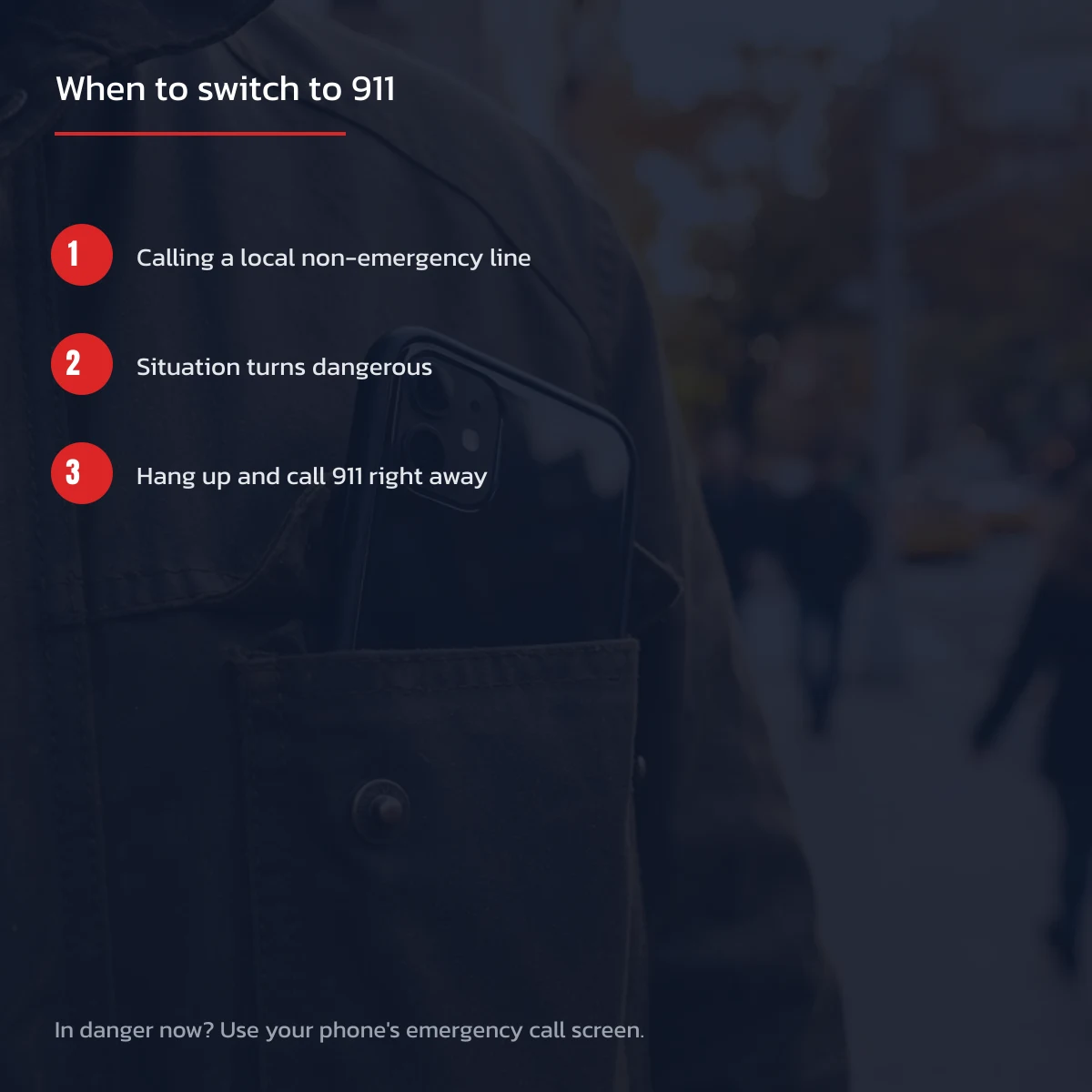
Check the official source before relying on it. If the situation changes and becomes dangerous while you are on a non-emergency line, hang up and call 911 right away. Numbers and services can change. If unsure, dial the general emergency number shown on your phone’s emergency call screen.
See also when to call 911.
Was this page helpful?
One tap tells us which guides need more detail.
Thanks for your feedback!